

For centuries, the Silk Road was more than a series of paths carved into the earth by camel hooves and merchant boots; it was the world’s first global luxury marketplace. It was a network of mercantile alchemy where the aesthetics of the East and West collided, creating a fusion of style that remains the blueprint for modern sophistication.
To understand the Silk Road ethos today, we must look back at the "lost" cities: the legendary trade hubs that served as the ancient world’s fashion capitals. Cities like Samarkand, Kashgar, and Merv were not just stops on a map; they were vibrant laboratories of culture where the goods traded: silk, lapis lazuli, and gold: defined the status and style of empires.
Samarkand: The Azure Heart of the Route
Often called the "Pearl of the East," Samarkand stands in modern-day Uzbekistan as a monument to the endurance of beauty. Under the reign of Timur in the 14th century, it became the architectural and cultural center of the world. Imagine the horizon dominated by cobalt-blue domes and intricate mosaic tiles: a visual language that used color to represent the infinite.
The primary driver of Samarkand’s aesthetic was its obsession with Lapis Lazuli and gold. This semi-precious stone, mined in the mountains of Afghanistan, traveled through Samarkand to reach the palaces of the Pharaohs and the cathedrals of Europe. It is this same reverence for natural materials and deep, regal palettes that informs the Silk Road Home Collection today.
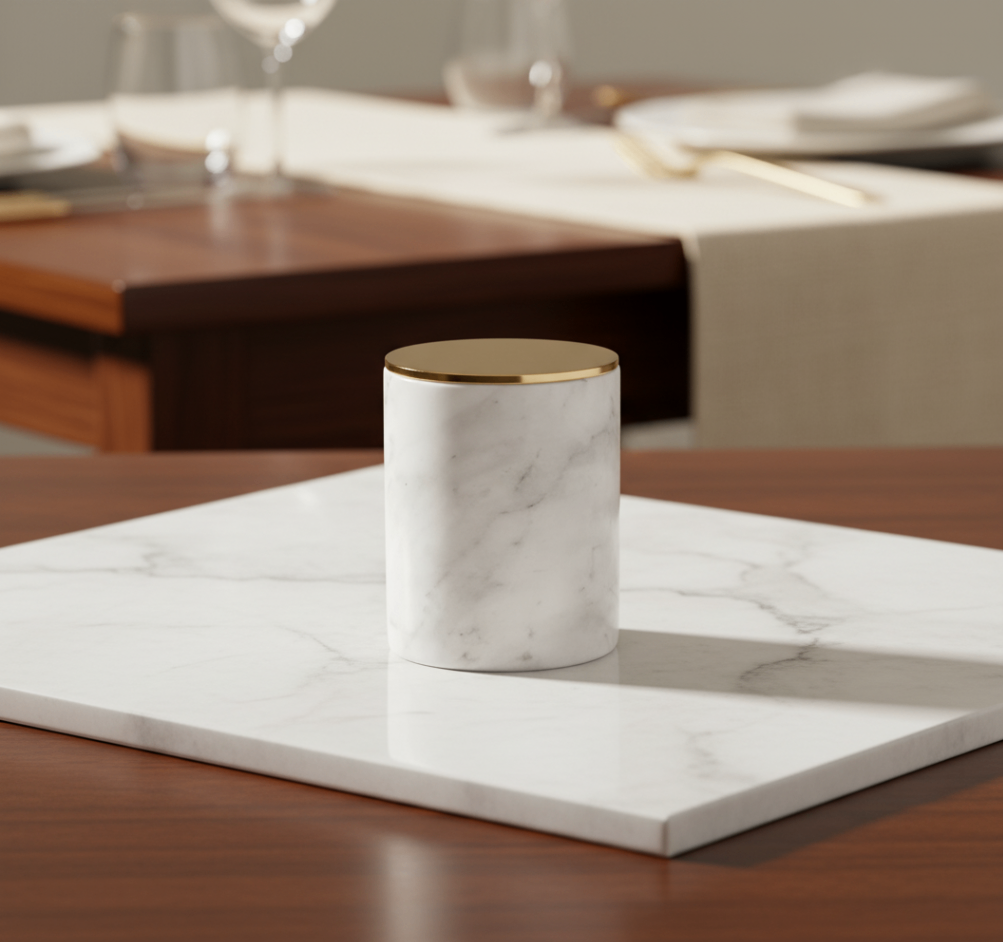
When we design our white marble accessories, we are pulling from the same design principles seen in the Registan Square: the marriage of cool, heavy stone with the warmth of gold accents. In Samarkand, luxury was never just about the object; it was about the craftsmanship required to marry disparate materials into a single, harmonious statement piece.
Merv: The City of Scholars and Tastemakers
While Samarkand was known for its grandeur, Merv (located in present-day Turkmenistan) was known for its intellect. Once the largest city in the world before its tragic destruction in 1221, Merv was a center for science, mathematics, and literature.
The merchants of Merv were the world’s first true tastemakers. They didn't just move products; they curated them. They understood that a garment or a tool was only as valuable as the story and the skill behind it. This intellectual approach to luxury is what we call "refined simplicity." In a city filled with libraries and observatories, the tools of communication: inks, parchments, and pens: were as highly valued as gold.

This legacy lives on in our appreciation for the written word and the "Ink and Intent" philosophy. Our luxury fountain pens and desk accessories are a nod to the scholars of Merv, who believed that the items we use daily should reflect our highest aspirations and our respect for heritage.
Kashgar: The Oasis of Textiles
At the western edge of the Taklamakan Desert lies Kashgar, a city that has hosted a Sunday market for over two thousand years. If you were looking for the finest silks, the softest wools, or the most vibrant dyes, you went to Kashgar. It was the gateway between the high-speed trade of the plains and the rugged paths of the mountains.
Kashgar’s influence on modern style is most evident in the concept of the "statement piece." In ancient times, a traveler might wear a simple, durable robe for the journey but carry a single, exquisitely woven silk scarf or a gold-embossed belt to signify their status upon arrival. This "one statement piece" philosophy is a core pillar of how we recommend building a modern wardrobe.

Our collections often feature silhouettes that honor this history: think of our light blue silk dresses or draped evening wear. These pieces are designed to be effortless yet impactful, much like the textiles that once flowed through the gates of Kashgar. They bridge the gap between the nomadic need for versatility and the metropolitan desire for elegance.
The Materials of Empire: Why They Matter Now
The Silk Road didn't just trade goods; it traded the idea of quality. The ancient world understood something we are only now relearning in the age of fast fashion: quality is sustainable.
- Silk: The namesake of the route. It was valued for its strength, its luster, and its ability to regulate temperature. In our modern collections, we treat silk not just as a fabric, but as a heritage material that deserves respect.
- Gold: Used in jewelry to denote power and identity. The resurgence of personalised gold jewellery today is a direct descendant of the signet rings and amulets traded in the bazaars of Samarkand.
- Lapis Lazuli: The "blue gold." Its presence in ancient style reminds us to look toward the natural world for our color inspiration rather than synthetic trends.

From Ancient Hubs to Modern Closets
Why do these lost cities still matter to the modern woman or man? Because they prove that style is a conversation that spans millennia. When you choose a piece that prioritizes craftsmanship over "newness," you are participating in a tradition that was perfected in the workshops of Merv and the looms of Kashgar.
Modern luxury is often defined by its price tag, but at Silk Road, we believe true luxury is defined by its lineage. It is the feeling of a cashmere sweater that has been perfected over generations, or the weight of a marble tray that feels as solid as an ancient foundation.
As you look to curate your own "capsule" of heritage pieces, remember the merchants who crossed deserts to bring beauty to the world. They knew that a well-made object is a vessel for culture. Whether you are styling a tailored suit for a boardroom or choosing a centerpiece for your home, you are drawing on the aesthetics of Samarkand and the wisdom of the Silk Road.

Embracing the Legacy
The lost cities of the Silk Road may be buried under the sands of time or transformed into modern metropolises, but their contribution to global aesthetics is immortal. They taught us that style is at its best when it is a fusion: when it takes the best of many worlds and creates something entirely new.
At Silk Road, we invite you to explore this heritage. From the stones we select to the fabrics we weave, every piece is a tribute to the trade hubs that shaped our world. We don't just sell fashion; we share a legacy of elegance that has traveled thousands of miles and thousands of years to reach you.
Discover more about our journey and the artisans who keep these traditions alive on our News Blog.